Friday, March 27, 2026
Home Blog Page 50

Cabinet Cluster for Education Sought

CITING DISMAL PREDICAMENT hounding the education sector, members of the Senate adopted a resolution urging President Ferdinand Marcos Jr. to seriously consider the idea of forming a Cabinet Cluster for Education, if only to ensure a cohesive implementation of education laws, policies, reforms and regulations in all government offices.

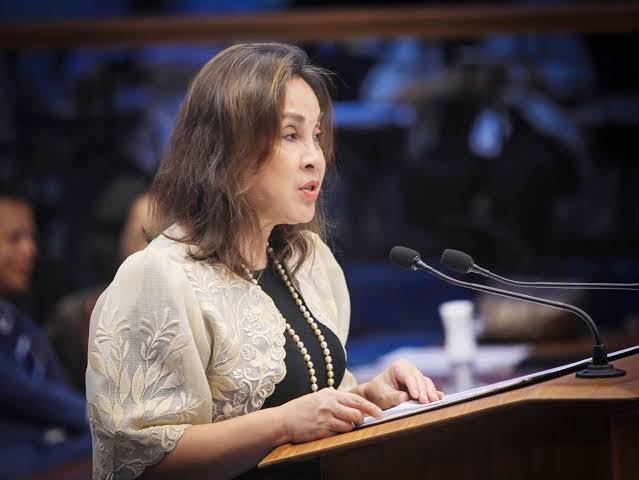
In concurring Senate Resolution No. 21 (series of 2025), Senator Loren Legarda in her capacity as principal author, finds it “rather imperative” to come up with a long-term integrated national education and workforce development plan to address the long-standing coordination challenges and gaps in strategic planning across the education sector.

To date, inter-agency bodies facilitate coordination in various education-related issues, but have yet to come up with a unified strategic direction that would strengthen the education system and policy implementation throughout the country. 

“For decades, the education system has operated under a ‘fragmented structure’. (This needs to be resolved if we want to upgrade the education of the next and coming generations of Filipinos),” Legarda, pointed out. 

“(But) what we (is important) now is (to have) the will to connect them, discipline coordinate efforts and (ensure) commitment to break institutional silos,” she added. 

In closing, the former journalist explained that “the proposed Cabinet Cluster (is expected) to correct the gaps in the education sector but will not centralize authority and instead harmonize strategy and hold agencies jointly accountable for results, enabling a truly system-wide response to the education crisis we face.”

DOH Blames Internet Porn Over HIV Surge 

0

AMID reports of an extremely alarming spike in Human Immunodeficiency Virus (HIV) in the Philippines, the government has found an excuse for its failure to come up with measures that could have prevented what has become a “new normal” among Filipinos.

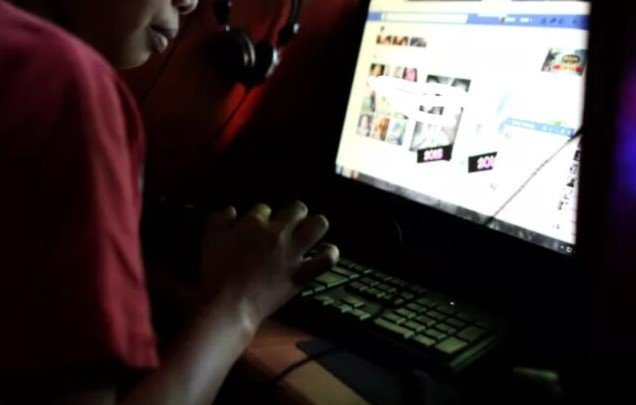
Citing its own data, the Department of Health (DOH) blamed the proliferation of online pornography for the “high-risk sexual behavior” among the Filipino youth.

Health Secretary Ted Herbosa also blamed dating apps on the internet for the prevalence of the sexually-transmitted disease.

As of the first quarter of 2025, the health department has recorded an average of 57 new HIV cases per day, which represents a whopping 500 percent increase as compared to the same period of the previous year.

“Tumaas ang risky behavior. So, number one, easy access to pornography online; number two, mga dating apps; number three, hindi gumagamit ng protection, unprotected sex” Herbosa said during a media briefing.

SEXUALLY ACTIVE KIDS

The DOH chief noted that from January to April this year, 6,703 HIV cases were recorded from January to April 2025.

Of this figure, people within the age bracket of 15 to 25 years old formed the bulk of new HIV cases. Interestingly, the health chief took note of a 12-year old child whose sexually-active life at a tender age made her the youngest HIV-positive.

By his own admission, Sec. Herbosa said that the fact that the youth which accounts for a huge chunk of the recorded HIV-infections makes testing and prevention a challenge for the government.

He particularly expressed apprehension on the impact of social stigma on testing uptake — “Napansin ko, tumataas iyong HIV kasi mataas pa rin ang stigma sa atin.”

NEED FOR LEGISLATION

In an apparent effort to contain the surge, Herbosa cited the urgent need for legislative measures for mandatory parental consent for the government to admit and treat HIV-positive kids.

“Ang problema, kailangan din namin ng parental consent ng start of treatment, so, that’s another legislation na kailangan namin,” he admitted. 

More than parental consents, the DOH chief also finds it imperative for Congress to allocate sufficient funds — for testing and treatment.

“Kita ninyo na to battle HIV ay kailangan ko ang legislation, kailangan ko ang funding, kailangan ko ng information campaign,” Herbosa added.

He cited the need for massive information campaigns if only to make the people realize that HIV is curable and that the government has the capability to manage such just like any chronic condition — but only if detected early and treated consistently.

HEALTH EMERGENCY

In view of the alarming figures, the DOH finds it rather imperative for President Ferdinand Marcos Jr. to declare the proliferation of HIV as a national public health emergency.

“Sa datos natin, tayo na ang pinakamataas na new cases dito sa Western Pacific Region. Ang nakakatakot lang napakarami po ang ating new cases sa ating mga kabataan,” he said.

He warned that without urgent intervention, the number of people living with HIV in the country could exceed 400,000.

Data from the Philippine National Aids Council show that the country has almost 149,000 confirmed HIV cases nationwide.

OECD Downgrades Global Growth Outlook

CITING RISING TRADE barriers, tighter financial conditions, and mounting policy uncertainty, the Organization for Economic Cooperation and Development (OECD) has downgraded its global economic growth forecast to 2.9 percent for this year and 2026, down from previous outlook of 3.1 percent.

Meanwhile, the lifting of trade barriers, if done immediately or over the short term, may help boost economic growth and ease inflation pressures.

The OECD said in its latest Economic Outlook report that major economies like the United States and China will see their economies slowing down significantly in 2025 and next year.

“The slowdown is concentrated in the United States, Canada, Mexico and China, with other economies expected to see smaller downward adjustments,” the report said.
It stated that the global economic environment is becoming increasingly challenging, identifying factors such as substantial increases in trade barriers, tighter financial conditions, weakened business and consumer confidence, and elevated policy uncertainty.

“If these trends continue, they could substantially dampen economic prospects. Rising trade costs—particularly in countries implementing new tariffs—are likely to fuel inflation, although this may be partly offset by softer commodity prices,” the OECD report added.

The report further said that inflation globally may remain at higher levels for longer periods than what was expected, which can also affect gross domestic product (GDP) growth.

For the United States, which saw its economy grow by 2.8 percent last year, is expected to sees its GDP increase by 1.6 percent this year and 1.5 percent in 2026, or below the OECD’s previous projections of 2.2 percent this year and 2.6 percent in 2026.

In the Eurozone, GDP growth is expected to remain the same, or increase from 0.8 percent in 2024 to 1 percent this year and 1.2 percent in 2026.

As for the Chinese economy, GDP growth is forecast to slow down to 4.7 percent from 5 percent in 2024, and to 4.3 percent next year, or lower than the previous projections of 4.8 percent for this year and 4.4 percent in 2026.

Not One PH City Makes It To Agoda’s ‘Stroll-Worthy Cities’

“Walking is such a simple yet rewarding way to explore a destination. It’s about letting the world unfurl around you, noticing the little things, and really soaking in the atmosphere of a place,” said Andrew Smith, Senior Vice President, Supply at Agoda.

NOT ONE CITY in the Philippines made to the Agoda’s list of “Asia’s most stroll-worthy cities.”

This development comes after the United States warned its citizens of visiting the country because of crimes, and reports of South Korean citizens becoming victims of criminality in Metro Manila.

Also, tourist arrival to the Philippines hardly went up, or stood at 6 million for the first quarter of the year

Agoda said there are various factors that make a city stroll-worthy, stating that “Agoda’s list of Asia’s top cities toexplore on foot celebrates destinations where pedestrian-friendly streets, compact layouts, and clusters of attractions make walking the ideal way to experience the local culture.”

It added that walking through a city is more than just a way to get around, as it is a journey of discovery that engages all five senses.

The following are the cities in Asia that Agoda said are stroll-friendly:

1.Hanoi, Vietnam, that Agoda said is known for its pedestrian-friendly layout, and its local delicacies like Pho and Bánh mì from street vendors.

2.Kurashiki, Japan, which has picturesque canals lined with weeping willows and traditional white-walled kura (storehouses), creating a tranquil atmosphere.

3.Chiang Khan, Thailand, known for its famous pedestrian-friendly walking street, Chai Khong Road, ia car-free stretch lined with well-preserved wooden shophouses, cozy guesthouses, quirky cafés, and local boutiques.
4.Melaka, Malaysia, with the Melaka Old Town being a UNESCO World Heritage site that’s compact, flat, and ideal for a walking tour.

5.Pondicherry, India, that Agoda said is a walker’s paradise, with its grid-like street layout, pastel-colored colonial buildings, and tree-lined avenues. 

6.Gyeongju, South Korea, known as “the museum without walls,” with a historic city center is a treasure trove of historical sites, making it perfect for walking.

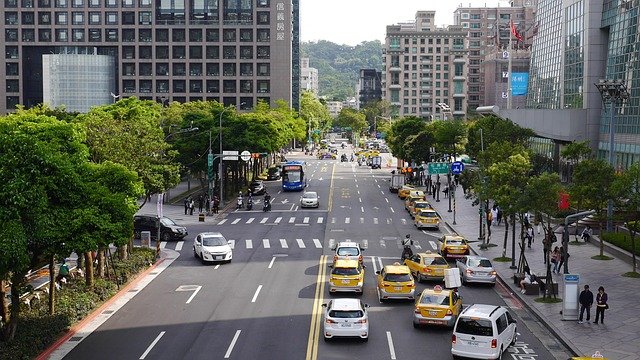
7.Taipei, Taiwan, that Agoda called the emerging “15-Minute City” that offers wide sidewalks, clear signage, and shaded boulevards for the perfect city adventure, complete with an efficient MRT system that connects walkable hubs seamlessly.

“Walking is such a simple yet rewarding way to explore a destination. It’s about letting the world unfurl around you, noticing the little things, and really soaking in the atmosphere of a place,” said Andrew Smith, Senior Vice President, Supply at Agoda.

“At Agoda, we love to help travelers find places where they can wander, get lost, and make memories that last a lifetime. Whether you’re strolling through Hanoi’s Old Quarter or catching the sunrise in Chiang Khan, we’ve got the stays and activities to make your trip unforgettable,” he added.

BOC Develops App To Track Balikbayan Boxes 

SO THAT OVERSEAS Filipino workers (OFWs) can track balikbayan boxes they sent home to the Philippines from anywhere in the world and avoid unnecessary losses or anomalies, the Bureau of Customs (BOC) proposed the launch of a tracking application. 

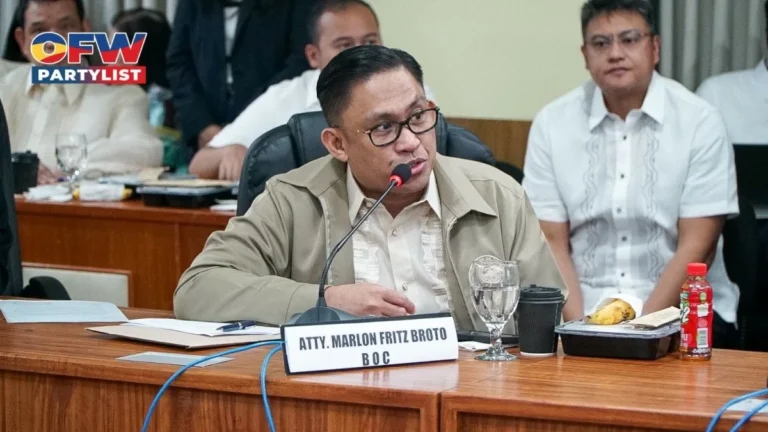
Customs lawyer Marlon Broto informed  congressmen of the bureau’s automation development during the House Committee on Overseas Workers Affairs hearing last Monday, June 2. 

The House committee is chaired by Tingog Party-list Rep. Jude Acidre 

Broto said: “One of the critical concerns for the BOC is to have what you call automation of the monitoring of the balikbayan boxes. So meaning to say, if you are an OFW, the moment you send your balikbayan box, you have already an application so that you will be monitoring your valid balikbayan box from the time you choose a consolidator, until it is released.”

This was timely as “the problem right now is that OFWs have “no way of checking or monitoring” their balikbayan boxes.

Broto said the OFW, who sent the balikbayan box, “should have the right … and the access to the box itself—where is it going, and whether it’s already reached the Philippines.”

“So we are doing this as part of the marching order of our customs commissioner to digitalize our systems,” he said, adding that the agency is already talking with possible service providers. He says they “will be doing due diligence if these systems are really applicable and practical”.

Broto added the proposal is yet to be approved, part of the agency’s plan is to have a “proactive response” on the matter.

It was the committee’s intention to encourage various government agencies to protect OFWs whose happiness is ship balikbayan boxes to loved ones at home. 

The move will promote a “safer and more humanitarian process of shipping balikbayan boxes” and ensure accountability of the providers. 

The app will help raise awareness among OFWs on who are the actual accredited and legitimate cargo forwarders.

The BOC is also making ad interim measures to expedite the process of sending balikbayan boxes for OFWs, including clearer documentation process, faster inspection process, and direct coordination with legitimate consolidators.

Much Ado About Nothing In Cabinet Shuffle

WHEN THE MIDTERM results showed the current administration’s dismal performance, by not voting its senatorial candidates, President Marcos Jr.’s immediate response was to demand a courtesy resignation of his entire Cabinet. This was massively lauded in  social and mainstream media.

A week or two later, the big letdown happened: He just replaced three and rehired or reassigned the others, retaining even those that have hyped on their so-called accomplishments (which to people were just nothing but boosting their self-image) to the utter disappointment of those that voiced their disdain for these officials.

One Cabinet member, whose task it was to create an environment that would foster the labor market and assure the laborers of their livelihood, is said to have hired and charged at the department’s expense the cost of maintaining his household staff (family drivers, maids, cook, gardener and others) in addition to providing positions to relatives and close friends. Upon his resignation, several employees (except his personal hires) heaved a sigh of relief, to no avail as he was retained.

The Department of Agriculture — whose task it is to protect and assure the livelihood of local farmers and fisherfolk — was busy planning out for the next importation of practically every food item that can be produced in the country. Alas, he too was rehired and retained. Why? People are asking in exasperation.

The Department of Agrarian Reform secretary, who unfortunately took over the helm long after the failed land reform program was adopted, has busied himself churning press releases on loans he had condoned (which taxpayers continue to shoulder for the national treasury to recover from this failure to collect) and the kinds of livelihood programs he has introduced in the countryside, which though laudable was expected of every functioning Cabinet member in the first place. 

‘The dramatic move — a response to his allies’ humiliating defeat in the midterms — was hyped as the boldest decision of his presidency … the Marcos reset showed that bold words don’t always lead to bold moves…’

BOOTED OUT

The only ones booted out were:

1) Antonia Yulo Loyzaga from the Department of Environment and Natural Resources, who during her term was busy jetsetting the world and barely made herself visible locally. She was replaced by Raphael Lotilla of the Department of Energy –a known advocate of renewable and clean energy. For the meantime, Lotilla’s post will be handled by former Rep. Sharon Garin, a USec of DoE. It is said the Palace is lining Yulo-Loyzaga for another post. 

2) Solicitor General Menardo Guevarra was booted out, as expected, because of his perceived loyalty to his former appointee — detained former President Rodrigo Duterte. He was replaced by UP College of Law Dean Darlene Berberabe.

3) Prospero de Vera was sacked as Chair of the Commission on Higher Education and replaced by Shirley Agrupis. As Rappler said “De Vera became controversial and explicit support for then-presidential and vice presidential candidates Bongbong Marcos and Sara Duterte during campaign season, despite being an active public servant then. De Vera consistently allowed, and in many cases, even forwarded policies that made education less accessible in multiple ways, for all different kinds of people”

4) Jerry Acuzar (a home developer) of the newly-created Department of Human Settlements and Urban Development was moved to a less high-profile role as Presidential Adviser for Pasig River Development. He was replaced at the DHSUD by another contractor, Undersecretary Jose Ramon P. Aliling

5) Foreign Secretary Enrique Manalo was replaced by Undersecretary Tess Lazaro, and reassigned as the country’s Permanent Representative to the United Nations.

BOLD RESET

Headlined Bilyonaryo.net: What a dud! Nice-guy Marcos’ “bold reset” fizzles out with only 3 Secretaries fired — the rest reshuffled or retained. It called President Marcos much-hyped Cabinet reset as more bark than bite.

As for Executive Secretary Lucas Bersamin, among the first to tender the courtesy resignation, along with the vaunted economic team, were all retained despite their faux pas and fiascos. 

As for the rest of the so-called purge, they were mostly lower-profile appointees whose exits made little noise.

Marcos accepted the resignations of: Meynardo Sabili, secretary of the Presidential Commission for the Urban Poor; Terrence Calatrava, Presidential Adviser for the Visayas; Almarim Tillah, Presidential Adviser on Muslim Affairs, and Menandro Espineli, Presidential Adviser for Special Concerns.

DRAMATIC MOVE

What a letdown!

This isn’t what the public expected when, just weeks ago on May 21, President Marcos stunned the nation by calling for the courtesy resignations of his entire Cabinet, senior government executives, and heads of state corporations.

The dramatic move — a response to his allies’ humiliating defeat in the midterms — was hyped as the boldest decision of his presidency.

From big bang to dud, the Marcos reset showed that bold words don’t always lead to bold moves, Bilyonaryo concluded.

The Elite’s ‘Champagne Of Drugs’ 

Quitting smoking is easy. I’ve done it a hundred times. 
                               — American humorist Mark Twain

THE TERM “COCAINE rich and famous” generally refers to the phenomenon of individuals becoming wealthy and gaining popularity (or notoriety?) due to their involvement with high-end drugs like cocaine. 

In the 1970s, the world saw a surge in cocaine use, leading to increased glamorization of the drug in popular culture, including films, music and even articles portraying it as the ‘champagne of drugs’. This period, often referred to as the “cocaine boom”, also contributed to the image of cocaine as a drug associated with wealth and the elite.
 
To date, many personalities are said to be hooked in the use of cocaine, among them people who are highly respected and looked up to as global leaders. 

‘To date, many personalities are said to be hooked in the use of cocaine, among them people who are highly respected and looked up to as global leaders.’ 

DRUG USERS?

Take the case of tech billionaire Elon Musk, who has vehemently denied the allegation of drug abuse: ‘I am NOT taking drugs!’ This rings a bell somewhere in the Palace by the Pasig River. Didn’t former president Rodrigo “Rody” Duterte repeatedly accuse President Ferdinand “Bongbong” Marcos Jr. as addicted to cocaine?

Musk denied a damning report published by the New York Times that he extensively used the anesthetic drug ketamine and other addictive chemicals extensively during the 2024 campaign trail of returning United States president Donald Trump. The report even described that the billionaire adviser to the reelectionist president used so much ketamine that he developed bladder problems.

The newspaper said the world’s richest person also took ecstasy and mushrooms and traveled with a pill box last year, adding that it was not known whether Musk also took drugs while heading the so-called Department of Government Efficiency (DOGE) after Pres. Trump took power in January.

But in a post on May 31,2025 in X, Musk stated: “To be clear, I am NOT taking drugs! The New York Times was lying their ass off.”
He added: “I tried ‘prescription’ ketamine a few years ago and said so on X, so this not even news. It helps for getting out of dark mental holes, but haven’t taken it since then.”

ERRATIC BEHAVIOR

At a bizarre farewell appearance on Friday, May 30, with Trump in the Oval Office, the Tesla and SpaceX boss noticeably had a black eye as he formally ended his role as Trump’s main cost-cutter at DOGE, which fired tens of thousands of civil servants.

News of the injury drew substantial attention as it came right after the Times report on his alleged drug use.

The daily recalled erratic behavior such as Musk giving an enthusiastic Nazi-style salute last year.

However, the billionaire explained that he got the injury while horsing around with his young son, named X, when he told the child to hit him in the face: “And he did. Turns out even a five-year-old punching you in the face actually is . . .”

Later, when a reporter asked Trump if he was aware of Musk’s “regular drug use,” Trump responded: “I wasn’t.” 
Hearing this response, we once again reminisce a similar response in Malacañang. 

FOR your comments or suggestions, complaints or requests, just send a message through my email at cipcab2006@yahoo.com or text me at cellphone numbers 09171656792 or 09171592256 during office hours from Monday to Friday. Thank you and mabuhay! 

Instead Of Pausing EDSA Rehab, Why Not A Hybrid Work Sched

INSTEAD OF SUSPENDING the rehabilitation of mega Manila’s major thoroughfare, the E. de los Santos Avenue (more known plainly as EDSA), why not adopt the hybrid work arrangement or four-day work week schedules for government offices and maybe public schools to reduce the volume of vehicles in this major road artery. 

‘[T]he president is not scrapping the project completely but just asking officials to go back to the drawing board and find a smarter, less painful way to do it. New technologies, better planning, less chaos.’

A lot of countries have embraced the four-day work week schedule, so what makes us any different from them because government offices have the most number of vehicles operating within a week– particularly SUVs used by legislators, executive branch top officials, and those of the armed services and local government units.

That is if the government really wants to hit two birds with one stone: fewer vehicles from the four-day work week and at the same time not further delaying (the already long-delayed)  major rehabilitation of EDSA.

REDUCED PRODUCTIVITY

As for private companies – which usually complain about reduced productivity due to long weekends and several holidays let us just leave it to their discretion. After all it is government offices (national and local) and public schools and public colleges and universities that cause huge traffic snarls in our roads.

The current state of EDSA is horrible and projects an image for the country of being backward in development.

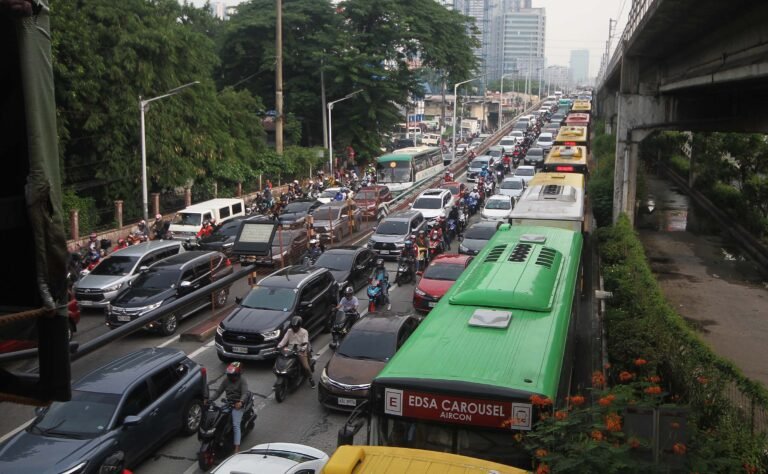
Too many potholes, heavy floods during rains and from being a five or six lane road has shrunk to three or less lanes (with the bus carousel on the inner left and the bike/motorcycle lane on the right), which is why the influential people sporting usually SUVs are forced to use the EDSA Bus Carousel lane even if they have to pay fines of P5,000 or more just so they can breeze through EDSA).

TRAFFIC HELLSCAPE

The President ordered recently the pause in EDSA rehab so as not to sink Metro Manila into a “traffic hellscape for the next two years,” Bilyonaryo said. 
.
Marcos stepped in and ordered the Department of Public Works and Highways and Department of Transportation to temporarily stop the planned overhaul of Metro Manila’s busiest road, worried that pushing through would mean two straight years of unbearable traffic and economic pain. (Could it be that the pause is so as not to portray the country in a bad light in preparation for its hosting of the ASEAN summit in 2026).

“I told Secretary Vince Dizon (DOTr) and Secretary Manny Bonoan (DPWH), let’s hit pause on the EDSA rehab. When we look at the cost-benefit, sure—it sounds good. But the sacrifice is just too much,” Marcos said in a recent interview.

But the president is not scrapping the project completely but just asking officials to go back to the drawing board and find a smarter, less painful way to do it. New technologies, better planning, less chaos.

“We’ll find a better way—one that won’t be as difficult,” he added.

SLOW DOWN, REASSESS

Along with the rehab pause, the planned odd-even traffic scheme is also on hold, confirmed Secretary Dizon.

Senator JV Ejercito supported the President’s move, saying it’s the right call to slow down and reassess.

“Glad the President suspended the EDSA rehab! We need a proper economic benefit assessment before we move forward,” he posted on Facebook.

Ejercito pointed out that Metro Manila’s traffic nightmare already costs us more than ₱3.5 billion a day, and could balloon to ₱5.4 billion daily by 2035 if nothing changes. Still, he emphasized that rushing the wrong fix could make things worse.

Paradise In Lavezares!

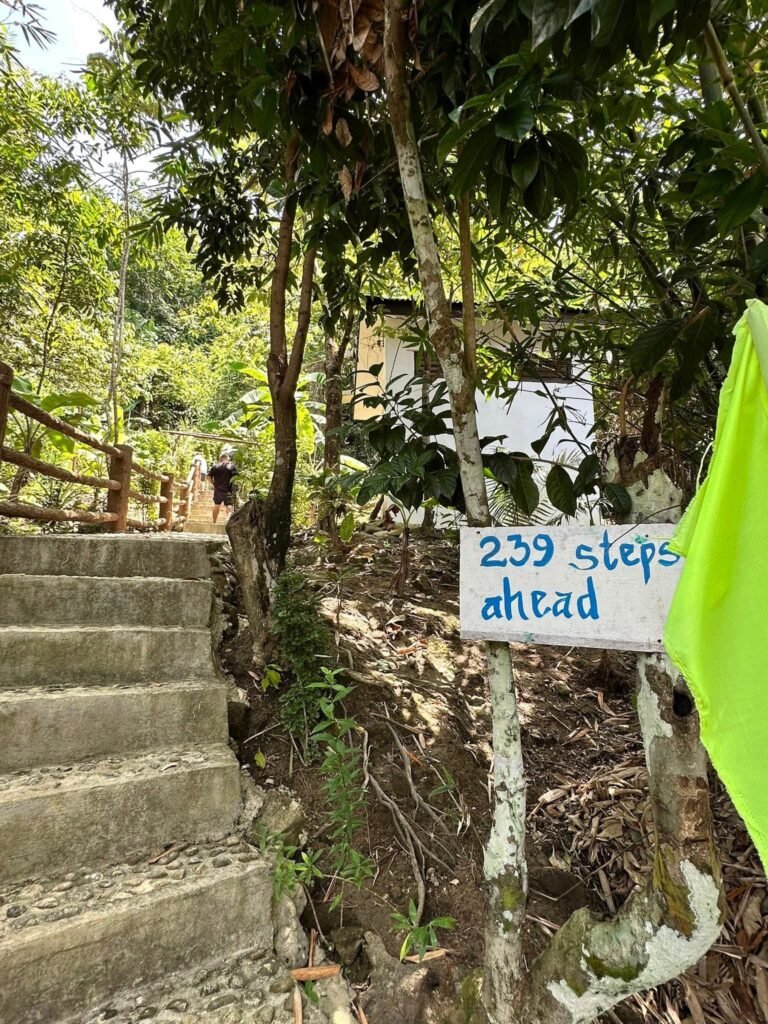
HOW THE AWESOME Lalaguna Eco Park’s serene waters and lush surroundings wow tourists!

Hidden in the heart of Lavezares, Northern Samar, this eco-gem is perfect for a peaceful escape and nature-filled adventure. 

Current Governor Edwin Ongchuan, and incoming congressman of the province’s second district, expressed his unwavering commitment to promoting tourism in the province. Likewise, Lavezares Mayor Edito B. Saludaga and Municipal Tourism Officer Jasmine Balag-Abueza flaunted their hospitality and proudly showcased the pristine beauty of Lalaguna Eco Park.

For its invaluable support in spotlighting Northern Samar’s hidden gems, the provincial tourism office expressed appreciation to Philippine Airlines for featuring this site. 

The Dynamic Duo

EVER FEEL LIKE something’s off, but you can’t quite explain it? Maybe your mood feels heavy, or your thoughts are racing. 

THE BACK STORY 

That’s where emotional wellness and mental health come in. They’re not exactly the same, but they definitely work together. And when one is off, the other usually feels it too.

HOW THEY’RE CONNECTED

Teamwork makes the “feel-good” work

Emotional wellness and mental health are closely tied. When you’re feeling calm, steady, and emotionally balanced, your mind usually feels clearer too. 

  • You think better, make smarter choices, and don’t get stuck in negative loops.

On the flip side, when your thoughts are in a good place – organized, rational, and focused – it’s much easier to deal with your emotions. 

  • You’re less likely to be overwhelmed by stress, frustration, or sadness.

They feed off each other in a good way. One helps the other stay strong.

HOW THEY’RE DIFFERENT 

Same team, different roles

Emotional wellness is all about how you feel. It’s your ability to notice, understand, and manage your emotions – whether that’s stress, joy, anger, or peace.

Mental health is the bigger picture. It includes your emotions, plus your thinking patterns, focus, memory, and how you handle daily life.

Each choice you make – no matter how small – is a step toward a calmer mind, a stronger heart, and a brighter you. Keep going. You’ve got this.

WHY BOTH MATTER

You can’t just pick one

A lot of people try to “think” their way out of emotional moments, or “feel” their way through mental stress. But really? You need both.

Your emotions can tell you something’s wrong. 

  • Your thoughts help you figure out what to do about it. 

Your feelings show up in how you treat people. 

  • Your thoughts shape how you see the world. 

Neglect one, and you’ll start to feel off-balance – emotionally drained or mentally foggy.

When you care for both your emotional wellness and your mental health, you’re building real, lasting strength. 

  • You become more calm, more confident, and more in control of your life.

A REAL-LIFE SCENARIO

The spiral begins

You get a vague text from a friend that says: “We need to talk.”

Emotions: Your chest tightens. Your stomach flips. Anxiety creeps in.

Thoughts: “Did I do something wrong?” “Are they mad at me?” Your mind spins.

What’s happening: Emotions hit first. Then thoughts rush in to make sense of the feeling. One triggers the other. That’s your dynamic duo at work.

BOOST YOUR MOOD AND MIND

Feel It, Name It

Take a moment each day to check in with how you’re feeling and what’s on your mind – no pressure, just awareness.

Try this quick jump-start:

  • Take 5 slow, deep breaths  
  • Jot down 3 feelings you noticed today

Move to Improve

A short walk or stretch can boost your mood and help clear your head.

Speak It Out

Talking to someone you trust lightens the load and gives you a fresh take.

TIPS AND TECHNIQUES

Little steps. Big difference.

Caring for your emotions and thoughts doesn’t have to be complicated. 

  • Just a few small moves each day can help you feel more balanced, more grounded, and more you

Each choice you make – no matter how small – is a step toward a calmer mind, a stronger heart, and a brighter you. Keep going. You’ve got this. 

RememberTreasure your dynamic duo. Stay kind to your mind – and give your heart a hug.

Sheer Lack Of Political Will

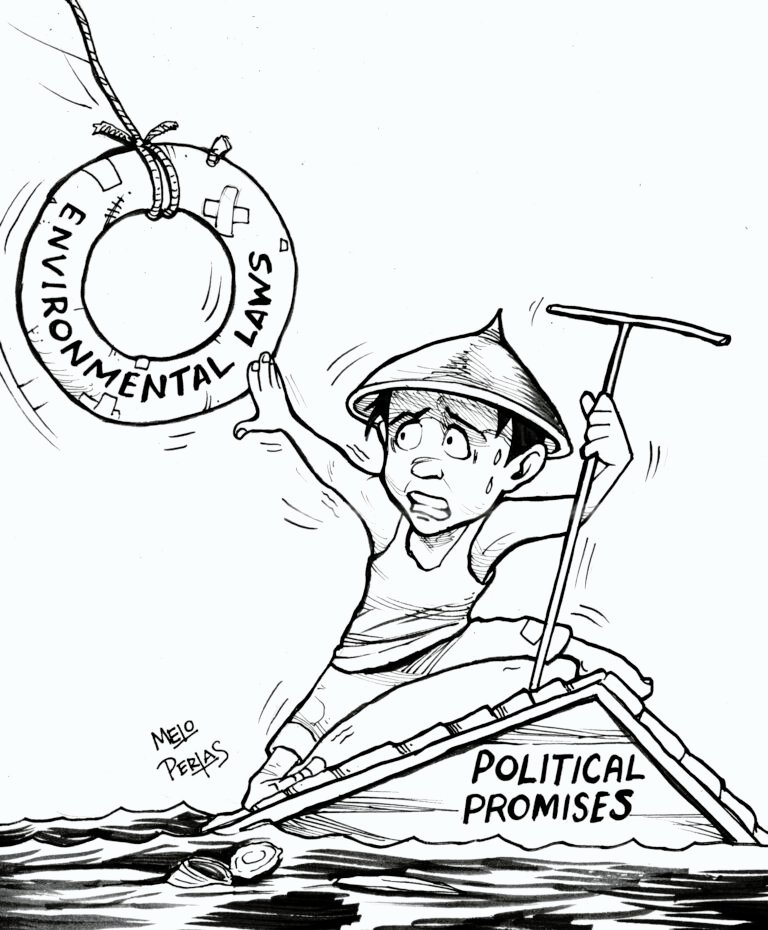
FOR THE LONGEST time, the Philippine government has been insinuating on the urgent need to allocate sufficient funds to ensure effective implementation of programs embarking on environmental protection.

The Philippines has more than enough environmental laws — Republic Act 9729 (Climate Change Act), RA 9275 (Philippine Clean Water Act), RA 7942 (Mining Act of 1995), RA 9003 (Ecological Solid Waste Management Act), the NIPAS Act, and the Renewable Energy Act of 2008, among many others.

However, politics and vested interest — or the sheer lack of political will somehow affected its full implementation.

For one, floods, earthquakes, landslides, heatwave, forest denudation, and high concentration of pollution in rivers, lakes and even the air we breathe, require swift and decisive actions.

The Manila Bay reclamation project, the deteriorating state of the Laguna Lake, the desecration of the Chocolate Hills, and denudation of the Upper Marikina River Basin Protected Landscape, scraping of the Sierra Madre mountain range, are but some of the indicators of the government’s inability to protect what is left of the environment.

Also forming the list is the proliferation of coal mining which continues to decimate efforts to shift to renewable energy.

Interestingly, the Department of Environment and Natural Resources (DENR) and bureaus under its radar, have been reduced to token stewards as the agency heads are beholden to the appointing authority.

Oh yes, politics and vested interest environment protection are intertwined. As such, environmental laws have been decimated into nothing but documents piling up dust in government offices.

In a nationwide survey administered by the Harvard Humanitarian Initiative, eight in every 10 Filipinos are not happy with the way the government has been addressing environmental concerns. The remaining 20 percent are either unsure or unaware.

What does this mean? More Filipinos have become mindful of the potential impact of an environmental crisis, but the government seems to underestimate its risks and implications — or maybe, they’re compromising public safety for the love of money.

Cherie Mae Ocampo of Cebu Province Crowned Mrs. Philippines International 2025

PARAÑAQUE CITY — The country’s most inspiring and accomplished married women were honored at the grand coronation night of Mrs. Philippines International 2025, held on May 30 at The Theatre, Solaire. Cherie Mae Ocampo of Cebu Province emerged as the new Mrs. Philippines International 2025, headlining a roster of empowered queens from across the country.

Organized by Mrs. Philippines International Productions Inc., led by Maan Aris and Aries Concepcion, the pageant celebrated women of grace, substance, and purpose across various categories.
Crowned alongside Ocampo were:

Claire De Guzman of Mandaue City as Mrs. Philippines Tourism 2025 (Classic)
Evangeline Mae Castillo Robea of Tarlac Province as Mrs. Philippines International Global 2025
Sugar Mercado of Quezon City as Mrs. Philippines Universe Official 2025 (Elite)
Lysette Lacsamana of Lemery, Batangas as Elite Mrs. Philippines International 2025
Cherryann Alix Solomon of Zambales Province as Mrs. Planet Philippines 2025
Wendelyn Talabis of Laguna Province as Mrs. Philippines Supranational 2025
Daisy Rabaya of Cebu City as Classic Mrs. Philippines International World 2025
Jay Maricor Carredo of Ginatilan, Cebu as Mrs. Philippines National Universe 2025
Sandra Oranza of Cavite Province as Mrs. Philippines International Global 2025
Princess Abella of Minglanilla, Cebu as Mrs. Philippines Grand International 2025
Kriselle Jhean Tabalanza of Pampanga Province as Mrs. Philippines International World 2025

The prestigious event showcased the delegates’ advocacies, intelligence, and poise, underscoring the evolving role of Filipina women in shaping families, communities, and the nation. The winners will soon represent the Philippines in various international pageants and global platforms celebrating married women’s achieveme

Plastic Pollution Endangers Our Ecosystems

HEEDING THE CALL to combat plastic pollution on World Environment Day (June 5), it is with firm conviction I believe that it is everyone’s concern and responsibility to take action, participate and contribute in a quest for cleaner and more sustainable world for brightier and greener future.

As the whole World highlights the very essence of finding massive and collective innovative solutions in our weakening and endangered world ecosystems, this year World Environment Day 2025 theme is “Ending Plastic Pollution”. 

In a related event, this year’s main event will be held in Jeju, Republic of Korea. The day aims to highlight the global crisis of plastic pollution and drive momentum towards solutions like refusing, reducing, reusing, recycling, and rethinking alternative plastic use. 

ALARMING ACCUMULATION

One of the most pressing environmental issues in the world today is plastic pollution.

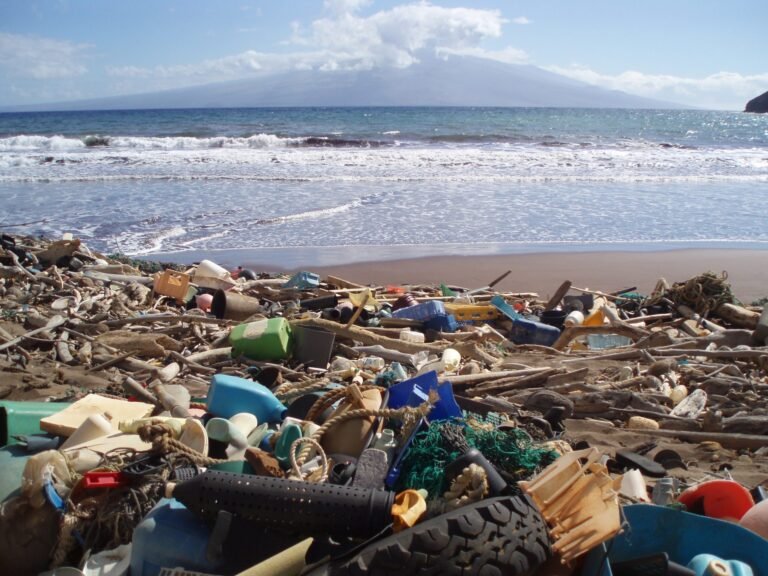
The excessive use of plastic products has led to an alarming accumulation of plastic waste in our oceans, landfills, rivers and other areas.

This alarming accumulation of plastics incidents has resulted in the death of marine animals, pollution of water bodies, and other negative impacts on the environment. There are several solutions, however, that can be implemented to address this issue for future generations.

“Plastic pollution poses a grave threat to our ecosystems, endangering the delicate balance of life on Earth,” said Secretary Robert E.A. Borje, vice chairperson and executive director of the Climate Change Commission.

An enormous ecological impacts of plastic pollution are significant and far-reaching, affecting everything from individual creatures to the overall health of our endangered planet’s ecosystems.

WEAKENING ECOSYSTEM

Accumulated plastic debris poses a significant threat to habitats, natural processes, and biodiversity, endangering numerous species such as seabirds, fish, turtles, dolphins and others. Those animals that become entangled or ingest plastic suffer injuries, starvation, and death, disrupting food chains and weakening ecosystems.

According to UN Development Program, World Bank statistics and data from the Department of Environment and Natural Resources (DENR) showed that of the estimated 61,000 metric tons of solid waste generated daily in the Philippines, up to 24 percent is plastic, composed mostly of consumer goods packaging, cutlery, and shopping bags.

Approximately 2.7 million tons of plastics are discarded annually in the Philippines.

A total of less than 10 percent of the plastics we discard actually get recycled; the rest gets dumped, incinerated, or mismanaged.

RECYCLING PLASTIC

One of the most effective ways to reduce plastic pollution is by reducing the use of single-use plastics. This can be achieved by encouraging people to use reusable bags, containers, and water bottles. Governments can also impose a tax on single-use plastics to discourage their use and encourage people to adopt more sustainable alternatives

Another solution to plastic pollution is to improve waste management systems. This involves increasing the number of recycling facilities, implementing proper waste disposal methods, and educating people on the importance of waste segregation.

Governments can also invest in the development of new technologies that can help in the recycling of plastic waste.

Plastic bottles, cellophane and other common types of plastic emit methane and ethylene upon exposure to ambient solar radiation, whether in wet or dry environments. These potent greenhouse gases contribute to the steadily rising global temperatures, exacerbating the impacts of climate change.

ECOLOGICAL CHANGE

From grassroots advocates to champions of sustainability, people are stepping forward, initiating change and inspiring others to join the quest for a cleaner, greener future.

Amid this ecological challenge, a glimmer of hope arises – the collective determination and commitment of communities to combat plastic pollution and restore our planet’s health.

Dedicated civil individuals and organizations have taken up the mantle of ecological stewardship, embarking on conservation initiatives and grassroots movements to combat plastic pollution. Their endeavors underscore the transformative power of community engagement in nurturing a culture of ecological responsibility.

In many coastal communities in the Philippines, local fishermen have partnered with non-governmental organizations and private companies to clean up plastic waste from their shores, safeguarding crucial marine habitats and securing the sustainability of their livelihoods.

LOGICAL ALTERNATIVES

Meanwhile, in urban centers such as Metro Manila and Davao City, innovative entrepreneurs are leading the way in recycling and developing biodegradable alternatives to single-use plastics, providing sustainable solutions to the prevalent issue of plastic pollution.

As we strive to transcend the “Ending Global Plastic Pollution” 2025 theme narrative, we must embrace sustainable practices that minimize our reliance on plastic materials while maximizing the preservation of our natural resources, “ Borje  emphasized.

“However, the battle against plastic pollution extends far beyond the realm of advocacy; it requires a paradigm shift in our societal norms and consumer behaviors.

The UN Environment Program estimated that each person on the planet ingests around 50,000 microplastics, consisting of tiny plastic particles less than 5 millimeters in diameter, annually, often through our drinking water. Plastic waste emits harmful chemicals into our ecosystems, contaminating water and soil, which can harm wildlife and potentially make their way into the food chain, affecting human health as well.

UN data revealed that annually, 17 million barrels of petroleum are utilized for plastic production, alongside 13 million tons of plastic leaking into the ocean. Plastics are typically produced from raw materials such as petroleum, natural gas, and other chemicals derived from fossil fuels, contributing to greenhouse gas emissions that drive climate change.

EDUCATION CAMPAIGN

Meanwhile, companies can play a significant role in reducing plastic pollution by adopting more sustainable practices. This can be achieved by reducing the amount of plastic used in packaging, using biodegradable materials, and implementing sustainable supply chain practices.

A considerable portion of the planet’s marine species, including whales, dolphins, seals, sea turtles, and porpoises, have consumed plastics. This occurs because plastic debris can resemble seagrass, squid, or other prey, leading marine mammals, including herbivores like dugongs, to mistakenly ingest it.

In a report by the World Wide Fund for Nature (WWF) reported that 81 out of 123 marine mammal species have ingested or become entangled in plastic, resulting in the deaths of 100,000 marine mammals annually.

One of the most effective campaign to help reduce plastic pollution is through education and awareness campaign program. This involves educating people on the negative impacts of plastic pollution on the environment and encouraging them to adopt more sustainable practices. Schools, communities, and governments can organize campaigns and events to raise awareness on this issue.

Plastic waste pollution is a significant environmental issue that requires urgent action. By implementing the solutions outlined above, we can reduce the amount of plastic waste generated and protect our environment for future generations.

BECOME STEWARDS

Plastic debris mars its landscapes from the depths of the oceans to the peaks of the mountains, a widespread pollution that threatens the intricate balance of life on our planet. The Planet Earth now bears the scars of human neglect and abuse of the environmental pollution.

By integrating sustainable practices into our daily lives, we empower ourselves to become stewards of the planet.”

Borje said that while governments play a pivotal role in enacting policies that promote ecological sustainability, “it is the collective responsibility of individuals to embrace these principles in their daily lives.

“From recycling and responsible consumption to the development of biodegradable alternatives, every action, no matter how small, contributes to the collective effort to protect our planet’s future,” he added.

“Together, let us unite to safeguard our lives, livelihoods, and future amid climate change challenges,” Borje urged.

COMMITMENT

As we reflect on Earth’s World Environmental Month’s significance, let us recommit to ecological conservation and climate resilience, forging a path to a healthier planet.

“The fate of our planet is in our hands. Let us rise to the challenge and embark on this journey to a sustainable future, guided by unwavering resolve to preserve it for ourselves and future generations,” Borje concluded.

New Exportation System At Clark

A NEW SYSTEM that will simplify and accelerate the admission and re-exportation of aircraft parts for aviation businesses operating in the Clark Freeport Zone was launched and implemented recently. The initiative, introduced recently by the Bureau of Customs (BOC) headed by Commissioner Bienvenido Rubio, and the Clark Development Corporation (CDC), chaired by Edgardo Pamintuan, supports broader efforts to improve government service delivery. This reinforces the national push for ease of doing business as championed by President Ferdinand R. Marcos Jr. through Proclamation No. 818.

Getting Real (And Serious) On Plastics

0

IT’S WORLD ENVIRONMENT DAY on June 5 and the theme is “Combating Plastic Pollution”. Organizer United Nations has long been alarmed by this problem which poses significant threats to biodiversity, human health, and the global economy. And despite unwavering efforts to curb it, global plastic production has doubled in the recent decades with much of the plastic waste still ending up in the landfills or polluting the environment.

Some key figures:

*An estimated 20 million metric tons of plastic litter enter the environment annually with a big number going to oceans, rivers, and lakes.

*Plastic pollution costs billions of dollars annually due to reduced marine ecosystem services (mainly food supply and regeneration) and clean-up efforts.

-The Philippines, with its wealth of water bodies along with stretches of coastal areas, ranks third in the global plastic pollution.

‘As a non-biodegradable material, plastic can not be decomposed. It just remains on earth … a big part of which is dumped in bodies of water choking fishes and other marine creatures …’

DETRIMENTAL EFFECTS

As a non-biodegradable material, plastic can not be decomposed. It just remains on earth in the form of trash, a big part of which is dumped in bodies of water choking fishes and other marine creatures or if they survive, pass on their toxic elements to humans’ digestive systems.

There is an even more destructive kind many are not yet aware of: microplastics.

At sea, the actions of sun, wind, and waves break down plastic waste into small particles which further break down into microfibers.

Plastic microfibers have been found in municipal drinking water systems and drifting through the air. Scientists have now found such particles in people’s blood, lungs, and even feces. They are now urgently studying the extent of harm microplastics are doing to human health.

BEATING PLASTICS

So, there must be continuing efforts to limit throwing them away to landfills and oceans, toxic chemical substances and all.

Recycling has been the popular method to make used plastics more than pure waste.

Aside from disposing plastics to garbage collectors, they can be sold or donated to recycling or upcycling entrepreneurs to become valuable and long-used products like furnitures, ornaments, floorings, fashion accessories, and other creative stuffs.

Big businesses also reclaim their plastic containers to re-use or recycle in their new productions instead of adding plastic supply to the environment.

More sophisticated and large-scale recycling innovations have also sprouted, using advanced technologies with added value to the environment.

Petgas, a Mexican start-up company, is one example by focusing on converting plastics into high-quality fuels like kerosene, diesel, gasoline, gas, and paraffin, through thermal recycling called pyrolysis, the leading core recycling technology.

BE A PLASTIC WARRIOR

Getting real, curse plastic we may, but no individual and household I guess can fully get it out of one’s life. At the least, we should adopt new habits and mindset as consumers in support of the massive and urgent campaign to combat plastic pollution for better environment, health, and economy. Let me count the ways, which may already be singsong to the ears:

Avoid single-use plastics like beverage straws, cups, fast-food utensils. Bring own water bottle for refill.
Bring a cloth ecobag to market and mall to cut down on the stores’ plastic bags.
Buy glass-bottled or paper-packed products and in bulk rather than in sachet forms.
If you get to use a plastic-packed product like water or juice and you’re in a resort, make sure not to litter the water body and the shore.

Issues On The 2025 Mid-Term Elections

COMELEC CHAIR GEORGE Erwin Garcia and his fellow commissioners managed to dribble off from the persistent calls by concerned citizens, especially the TNTrio and other IT professional groups, for clarifications on certain discrepancies that plagued the May 9, 2022 national elections, leading to a strong belief of its rigging.

Somehow, the mid-term elections of May 12, 2025 appeared to be generally acceptable.

The election of former senators Bam Aquino and Kiko Pangilinan, and other known genuine opposition candidates in the lower house, like Chel Diokno and his two other nominees under the Akbayan Partylist, Leila de Lima of ML Partylist, and other nominees of party-lists ACT Teachers and Kabataan, not to mention other local winning candidates, have toned down the honest-to-goodness cries of “DAYAAN!” from various groups which have been in the forefront of the fight for truth, justice, human rights and good governance.

‘With the 2025 mid-term elections’ problems of ACMs malfunctioning, disenfranchisement of voters, uncontrolled vote-buying, harassment of certain candidates’ campaign sorties, etc., is Comelec up to its mandate of fair, transparent, credible elections?’

COMELEC’S BASIC TASK

However, it must be noted that the billion-peso acquisition and use of the Korean-tech Miru in this just-concluded election did not completely result in a transparent and fair handling by Comelec.

Why did Comelec Chair George Erwin Garcia not allow the foreign observers to watch the voting exercise, as required under the law?

State forces managed to cripple well-known progressive groups like Bayan Muna and Gabriela party-lists with massive disinformation, red-tagging, and actual harassment and intimidation of their supporters in their campaign sorties.

Comelec failed to act decisively to prevent such unlawful actions during the campaign period, even when these violations were brought to their attention on time.

Comelec’s basic task was to ensure that all candidates were given equal protection in their campaigning, and guilty parties promptly confronted and held accountable under the law.

TRANSPARENCY, DISQUALIFICATIONS

Technical glitches in the ACMs resulted in the disenfranchisement of countless number of voters. During the early hours of public media revelations of the vote counts of the leading candidates, there appeared confusing numbers.

Comelec failed to erase doubts expressed by netizens about the integrity of the information relayed by mainstream media, which was supposedly in close coordination with Comelec.

Also, the OFW voters met difficulties, or actually unable to vote, given the changes in the original system. They were unfamiliar with the necessity of re-registration and voting online, and only knew and were used to manual voting.

In other words, Comelec has not completely come out clean and transparent with this May 12, 2025 elections. In other words, Comelec has yet to prove itself incorruptible and able to run the next election exercise with efficiency and integrity.

Not to forget, moreover, is that Comelec mishandled disqualification cases.

Strong reservations were in the minds of voters themselves and the disqualification-targeted candidates. Aren’t Comelec guidelines on candidate-qualifications clear?

SHORTFALLS

Other issues came up: Were timelines for ballot preparations prepared realistically months before? Were protection measures on technology malfunctioning readied, to avoid delays and money wastage?

Manpower requirements at precinct levels and so-called hot spots should have been determined and scheduled without any hitch.

There were cases about voters being made to wait for hours under the hot weather, and voters not finding their names in their precincts where they voted in the past. What happened here?

Comelec’s shortcomings are clear. It failed to explain many discrepancies pointed out by IT professional groups and others about the May 9, 2022 elections.

Attempts to dialogue with Comelec chair George Erwin Garcia were simply brushed off.

With the 2025 mid-term elections’ problems of ACMs malfunctioning, disenfranchisement of voters, uncontrolled vote-buying, harassment of certain candidates’ campaign sorties, etc., is Comelec up to its mandate of fair, transparent, credible elections?

The Coming Political Bloodbath

THE RECENT STATEMENT of Vice President Sara Duterte warning of an impending bloodbath must not be dismissed lightly. While some commentators have downplayed it as mere rhetoric or exaggerated it as a threat of physical violence, it is better understood as a metaphor for an impending political bloodbath—a looming political civil war that threatens to fracture the Philippine political landscape even further.

This confrontation, a house divided against itself, carries long-term implications for the future of Philippine governance and democracy.

‘[Our] political history provides precedent for this kind of selective political annihilation, where victors weaponize state power to purge opponents and consolidate their dominance.’

VP Duterte has already mobilized her legal team and instructed her allies to go all out in preparing for her defense against the anticipated impeachment proceedings. She fully expects the sitting administration, to match this intensity with its own full-blown political offensive.

WHO WILL SURVIVE?

In essence, Duterte is daring her political rivals to bring forward everything they have, challenging them to engage in an all-or-nothing battle where only the strongest survive—matira ang matibay.

This is the very essence of what political scientists describe as high-stakes elite conflict, where rival factions within the ruling class engage in winner-take-all struggles that threaten institutional stability. These kinds of conflicts are rarely about policy differences; rather, they are power struggles aimed at monopolizing state resources and control over political institutions.

Political careers will rise and fall based on which side individuals choose, reinforcing clientelism and factional loyalties that have long characterized Philippine politics.

RETRIBUTION FOLLOWS

In her own words, Duterte has indicated that if she loses—if she is impeached or barred from seeking the presidency—so be it. If she is imprisoned like her father, former President Rodrigo Duterte, she claims she is prepared for that outcome as well.

This reveals a political strategy scholars refer to as “high-risk, high-reward” political gambling, where actors commit all their resources to a single defining battle, knowing full well that defeat could mean political death.

But should she survive and emerge victorious, Duterte has made it clear that political retribution will follow.

All those who allied with the administration are already marked, and she has promised to destroy their political careers.

TRACK RECORD

Philippine political history provides precedent for this kind of selective political annihilation, where victors weaponize state power to purge opponents and consolidate their dominance.

The Duterte family’s track record shows they possess the capacity, willingness, and motivation to carry out such reprisals.

This impeachment battle will likely deepen political polarization and fracture the country even further. Both sides will present themselves as the moral alternative—framing their struggle as a battle of good versus evil, corrupt versus incorruptible, a tactic widely recognized in political science as “moralized partisanship”. Such framing not only fuels division but also delegitimizes institutional checks and balances, weakening democratic accountability.

GEOGRAPHIC WAR

The political elites from the north are poised to face off against the political elites from the south. This is a geographic and factional civil war in the making—one that the Philippines has never fully experienced in modern times but which resembles factional elite fragmentation seen in other fragile democracies.

While the outcome of this political bloodbath remains uncertain, one thing is clear: whoever emerges victorious will dominate Philippine politics for years to come.

With such dominance, the winner will likely undermine the already fragile system of checks and balances, paving the way for the institutionalization of corruption at unprecedented levels. The state will become a personal fiefdom of the victorious political dynasty, further marginalizing the interests of ordinary Filipinos.

FILIPINOS STAND TO LOSE

Indeed, regardless of who wins this battle, it is the Filipino people who stand to lose the most. Both camps have histories of exploiting public resources for personal and political gain.

As political scientist Paul Hutchcroft in his outstaning book , Booty Capitalism, argued, the Philippine state has long been “captured by oligarchic interests,” and this upcoming political confrontation threatens to entrench that capture even further.

In light of this, the Filipino people must resist becoming mere pawns in this elite power struggle. We must remain vigilant, critical, and politically aware.

We must refuse to be instruments of their factional war. Our loyalty should not lie with any political dynasty, especially when both sides have demonstrated a capacity for exploitation and authoritarian tendencies.

EROSION OF DEMOCRACY

The erosion of democracy often begins not with a single violent act, but with the normalization of elite manipulation and the decay of democratic norms. This is why the true fight is not between these rival political families but against the entrenched culture of deception, greed, and corruption that has long oppressed the Filipino people.

It is time for ordinary citizens to wake up, unite, and stand for genuine systemic change for the future of the nation.

The people must reclaim the democratic institutions that have been captured by elite interests and demand transparency, accountability, and real reform. Only then can the cycle of elite domination be broken.

(Editor’s Note: Dr. Raymund E. Narag is an associate professor at the on Criminology and Criminal Justice at the Southern Illinois University. He also sudied at the University of the Philippines.)

Relaying The Message

IN WHAT APPEARS to be yet another blunder, the Presidential Communications Office (PCO) — for the nth time — failed to effectively relay a simple message embarking on “courtesy resignations.”

The PCO issued a press statement saying that Marcos sought the courtesy resignations of Cabinet secretaries, but there was no mention that the directive included other heads of agencies.

According to Executive Secretary Lucas Bersamin, the quit call, which is primarily aimed at recalibrating the administration, isn’t limited to cabinet secretaries. It covers presidential advisers, agency heads and bureau chiefs as part of the administration’s recalibration

He particularly cited the memorandum order which reads “Cabinet Secretaries, Heads of Agencies of Cabinet rank, other Heads of Agencies, Presidential Advisers/Assistants” to tender their “unqualified courtesy resignation.”

‘Taking a closer look at the government communications team, they all seemed qualified for the job. Could it be the absence of coordination among them that spoiled the job?’

EXEMPTED

It is for the PCO’s failure to relay the message the way they’re supposed to, that other presidential appointees — like Presidential Adviser Larry Gadon, was under impression that he’s exempted from tendering the courtesy resignation.

To be perfectly candid, relaying the president’s message doesn’t require a rocket scientist. It’s as simple as ABC.

Taking a closer look at the government communications team, they all seemed qualified for the job. Could it be the absence of coordination among them that spoiled the job?

Since the “new communications team” was formed in February, PCO has yet to prove that they’re worth the handsome salaries drawn from our taxes.

They can’t effectively handle controversies, they’re not even responsive to national crises. Worse, they are not good at damage control. Failure, that’s what it is.

EMBARRASSING

For one, the government’s chief communications arm’s inability to do a simple task which is to get its messaging right is unacceptable. And to think that the PCO is composed of seasoned communicators.

PCO’s incompetence and inconsistency translates to dismal credibility, which in itself should be more than enough reason for the President to seriously consider replacing Press Secretary Jay Ruiz — or perhaps the entire team.

Embarrassing is an understatement to describe the way PCO is handling government communications.

Of Smugglers, Hoarders, Cartels

DESPITE OUR VERY rigid law on anti agricultural smuggling, still these market disruptors (hoarders, manipulators and smugglers) proliferate simply because they have power, connections and money.

Not even the tight law on cartelized operations could stop them and noticeably not one of the perpetrators of these market malpractices are being charged and put behind bars because of their deep connections with the powers- that-be (past or present).

I am not surprised that even sitting President Marcos Jr. is now blaming the unnamed  “spoiled officials” of the Duterte era for smuggling and hoarding that kept rice (and other foodstuff) prices high for years during his term.

But wait, there are also officials within the palace halls and those other influential offices that protect smugglers and hoarders and they are so influential to even dictate the volume of importation of all agricultural products. 

‘It would be good for consumers and local producers alike if they would see even one big hoarder or price manipulator languishing in jail. That would be one big feather on the cap … if the one to be punished is part of the current administration.’

BIGGEST SMUGGLERS

Marcos, in debuting his podcast, said the previous administration officials profited from legal and illegal rice imports, which distorted the market and drove prices up. “Ang mga opisyal natin, spoiled—basta import lang nang import, legalman o illegal,” he said. “Ang pang-kontrol nila sa presyo ng bigas ay smuggled rice. Dahil dito, nagkakaroon ng hoarding.”

He further claimed that some of the biggest rice smugglers were public officials themselves.

Marcos, who ran in 2022 with the promise of bringing down prices to P20/kg, vents his frustration after seeing that prices continue to hover around P50/kg in most wet and private stalls and supermarkets.

KADIWA STORES

For most of his three years in office, only the Kadiwa stores (operated by the Department of Agriculture and Food Terminal Inc) are able to supply the consumers (especially the low-income buyers) his promised P20/kg rice in 2025. “Bakit nila papalitan ang sistema?” he said, criticizing the status quo when he assumed office. 

Marcos noted that prices stayed high from 2022 to 2024 even as his administration fervently tried to boost local production through subsidies, irrigation projects and distributing farm machineries.  

He vented that “2023 saw the highest palay harvest in Philippine history—and 2024 surpassed that.”

With improved harvests and supply, rice prices are finally beginning to ease—at least in government-supported channels.

LAX ENFORCEMENT

Understandably, hoarders, smugglers and price manipulators thrive because they see that enforcement of the new anti agricultural smuggling law is very weak. They even laugh about the supposed rigid penalties of the law.

Consumers and farmers are one in saying that weak monitoring and law enforcement have emboldened  these market distorters to continue with their game.

Even at peak harvest of rice and other agricultural products, these market distorters don’t give a damn if their greed cuts both ways to the detriment of local farmers and the buying public.

And as always, the government only issues threats after threats against them without a serious follow through on their pronouncements.

It would be good for consumers and local producers alike if they would see even one big hoarder or price manipulator languishing in jail.

That would be one big feather on the cap of this administration, especially if the one to be punished is part of the current administration.

It would not look good if the one being punished is from Duterte’s camp– which would only reflect the vindictiveness of this administration.

#agrismuggling

#innertruth

#spoiledofficials

#Marcosdebutpodcast

#laxenforcement

#weakmonitoring

#thephinsider

Paws And Protect On Ibabao Pet Day

0

Tiger Cubs Summer and Winter, the pride of San Roque in Northern Samar experienced a paws-itively exciting day during the celebration of Ibabao Pet Day recently. Summer and Winter received anti-rabies vaccines from clinicians Cynric Cajusay Flores and Crisa Ochondra, under the supervision of Dr. Arleen Tilbe, and with support from Tourism Officer Dianna C Magpayo. Here’s to happy, healthy tigers in a community that cares!